Rogoff warns of AI market excess
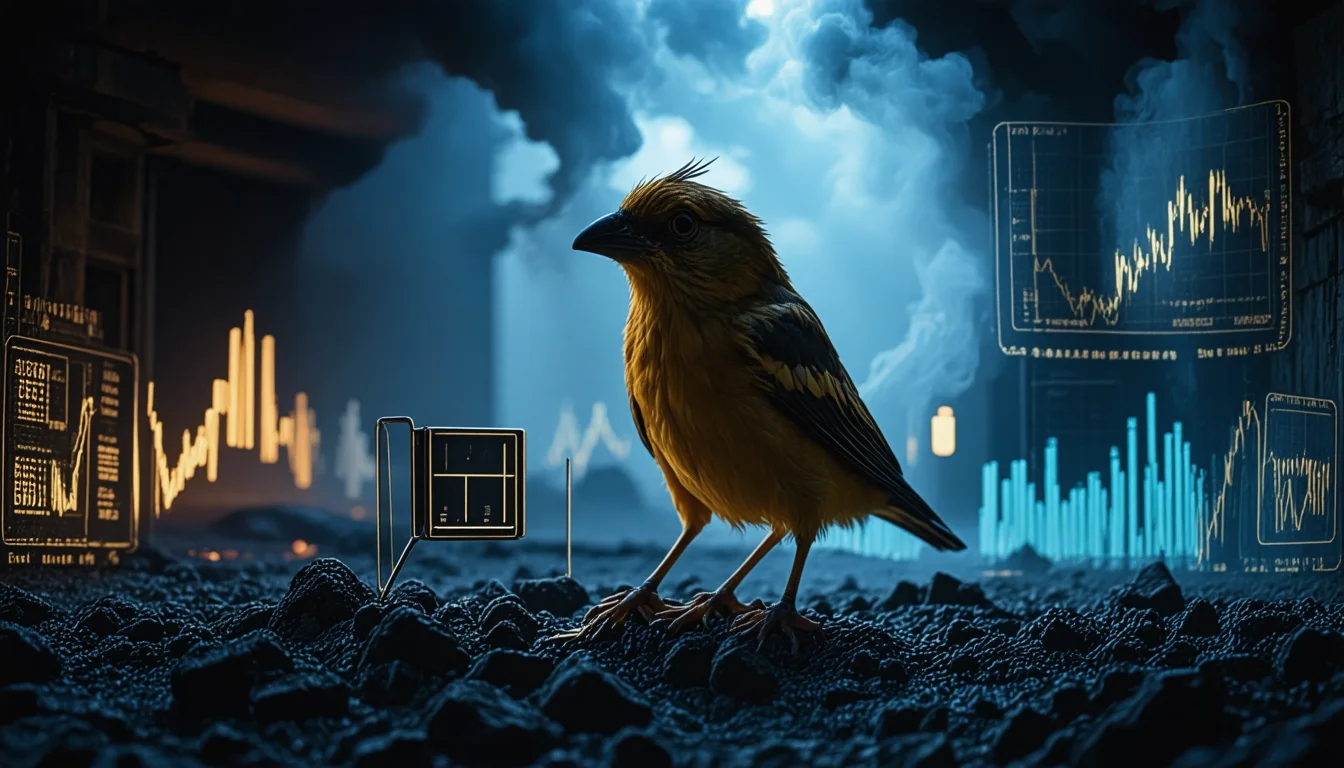
Kenneth Rogoff argues that South Korea is a warning sign for the broader AI boom. He presents the country as an early indicator of how speculation and debt can amplify risk when markets become overheated by enthusiasm around artificial intelligence.
The article connects South Korea’s role in global chip production and its stock market exposure to the pace of AI investment. Rogoff uses the metaphor of a canary in a coal mine to suggest that developments there may reveal vulnerabilities likely to spread elsewhere if investor optimism continues to outrun fundamentals.
Key Events
- Kenneth Rogoff published an opinion piece titled 'The canary in the AI coal mine.'
- The article frames South Korea as an early warning signal for broader AI market excesses.
- It links AI enthusiasm with financial speculation and heavy borrowing.
- The piece suggests that risks in South Korea’s markets may foreshadow wider problems in the AI sector.
U.S. invests in Guyana bauxite mine
The United States is moving to secure a foothold in Guyana's bauxite sector with an investment of US$85.5 million, supported by US$64.5 million from the private sector. The funding is intended to acquire and expand the First Bauxite mine, add new calcination capacity, and support a future brown-fused alumina facility in the United States.
The project is designed to reduce U.S. dependence on refractory-grade bauxite imports, which are currently sourced largely from China or Chinese-owned entities. The initiative is framed as part of a broader effort to strengthen supply chains for U.S. military and industrial needs.
Key Events
- The U.S. Department of War announces an US$85.5 million investment tied to Guyana's bauxite sector.
- Private-sector partners add US$64.5 million in co-investment.
- Funds are slated to acquire and expand the First Bauxite mine in Guyana.
- The project includes development of new calcination facilities for primary processing.
- A follow-on brown-fused alumina facility is planned in the United States.
- The initiative is intended to reduce dependence on bauxite imports from China and Chinese-owned entities.
UN expert warns against Haiti returns
William O’Neill, a UN human rights expert, warns that Haitians should not be forced to return to their country. Speaking to EL PAÍS from New York, he says the situation in Haiti is so severe that any forced repatriation would be unsafe, undignified and unsustainable.
O’Neill says the country’s human rights situation is catastrophic and argues that deportations would violate international law. His comments come as the United States, the Dominican Republic and other countries with large Haitian diaspora communities weigh or prepare deportations to Haiti.
Key Events
- William O’Neill says nobody should be deported or forced to return to Haiti.
- He describes the human rights situation in Haiti as catastrophic.
- He argues forced repatriation would not be safe, dignified or durable.
- He says sending people back would violate international law.
- The warning comes as the United States, the Dominican Republic and other countries consider deporting Haitians.
- The article places the comments in the context of Haiti’s worsening humanitarian and security crisis.
Poetry Society Keeps Monthly Tradition
The Space Poetry Reading Society traces its beginnings to the early 1970s, when poet Ku Sang visited an artists' cafe in San Francisco while teaching at the University of Hawaii. That encounter led to the formation of a poetry group that has continued to meet regularly over the years.
The society has maintained a monthly tradition of readings and discussions. Its meetings were first held at Space Love, then moved to Batangol Art Center in 1986. Today, the group gathers on the first Thursday of every month at North Terrace near Anguk Station in Seoul.
Key Events
- Poet Ku Sang visited an artists' cafe in San Francisco in the early 1970s while teaching at the University of Hawaii.
- That visit inspired the creation of the Space Poetry Reading Society.
- The society has continued monthly gatherings without interruption.
- The meetings were first held at Space Love.
- The group later moved to Batangol Art Center in 1986.
- The society currently meets on the first Thursday of every month at North Terrace near Anguk Station in Seoul.